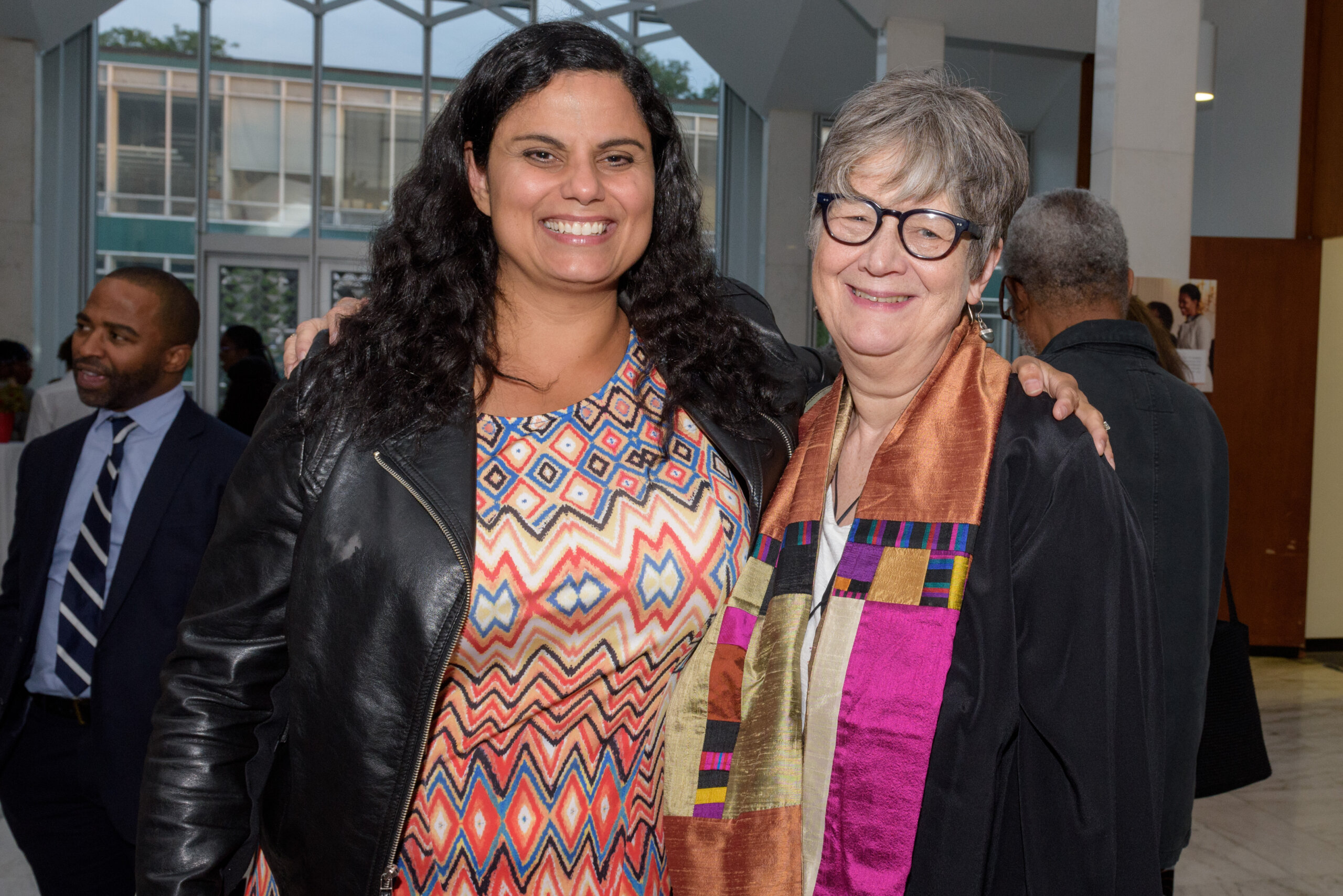
Stacy Parker LeMelle was a teaching artist with InsideOut during our formative years and helped founder Terry Blackhawk shape what InsideOut would become. She was an activist in the purest sense of that word in that she helped activate the written actions of her students. Stacy knew that teaching wasn’t done alone, that it wasn’t about magic, it was about work and that the actual “work” had begun long before she (or we) stepped foot into the classroom. In her essay that appeared in the anthology To Light a Fire: Twenty Years with InsideOut Literary Arts, which you can read in its entirety at the end of this post, she writes about this fundamental lesson of the teaching artist:
When I remember teaching in that Detroit classroom, I know I was proud. But only now do I realize that I was too proud. I misunderstood something crucial…: that whatever we reaped in that class hour was first sown by years of assigned and completed writing assignments, of readings in class and outside of class, by all that the students observed and were asked to comprehend and engage, by the cultivation of curiosity itself—in short: by all of the work done before we, the teaching artist, ever stepped into their worlds.
Stacy knew that she wasn’t “in this” alone. She made sure to recognize and praise the other people who made our work possible: the teachers, administrators, the parents, and of course the students themselves. That’s who she was. It was never about her. Her focus was always about lifting up and showing up for others.
Even after she left Detroit and moved to Houston, she took this “other people first” philosophy down to New Orleans in the wake of Hurricane Katrina and the devastation of the people there. She listened and helped the people of New Orleans tell their stories as part of The Katrina Experience and Voices from the Storm: The People of New Orleans on Hurricane Katrina and its Aftermath. Here again, it was Stacy’s act of offering others an opportunity to activate their own voices that shaped her during this time.
Eventually she moved back north to New York City to become a mother, which is something that she also speaks to in her essay:
Years later, in my Harlem apartment, I will watch my three-year-old son stack alphabet blocks. One on top of another. My son is a tall little kid, and his stack reaches up to his shoulders. He carefully places the last block atop the just-shuddering column and boom—the whole thing crashes to bits. He laughs. Time to do it again.
It wasn’t always like this. I bought those blocks when he was a one-year-old. Back then, all he wanted to do was gnaw on their wooden edges. When he could finally put one block atop another, he cried when pieces fell down. Sometimes, he wanted to throw them. Sometimes he did throw them. He needed to build, and fail, before he could build and succeed. This took several months. He didn’t build tall stacks with ease until he was three.
Yet I often buy toys and think yes, we will hand them to our son, and voila, he will know exactly what to do. This, despite being an educator. This, despite knowing, intellectually, that one has to learn how to do something, that it’s silly to secretly desire that our children will be able to do anything correctly on a first try. To be good, at something, anything, we have to practice. Again. And again. My son had to learn that if the blocks fall, he can pick them up and start over. That there is no crisis. That he can build again. That he can build higher.
Stacy did not stop working with and for other people. Sometimes those other people were women who were a part of the Afghan Women’s Writers Project. Other times, she turned her attention to the work that needed tending to in her own Harlem neighborhood where she co-founded Harlem Against Violence, Homophobia, and Transphobia. Here again it was about being there, standing with and showing up with and for other people. Stacy also curated the writers’ reading series where the name itself speaks for who she was: “First-Person Plural.” For Stacy Parker LeMelle it was always about the collective and communal “we.”
“We” here at InsideOut were taught through the actions and made better by Stacy’s words and example. May she rest in “people” and live on in the spirit of all those she loved and believed in.
“Notes for that Screenplay One of Us Needs to Write” from To Light A Fire: 20 Years with the InsideOut Literary Arts Project
Stacy Parker Le Melle
1.
This kind of silence is not stillness. This kind of silence is charged and dense and if you work hard it fills you as a teaching artist, it floats you as you walk down each aisle, or behind the backest back row, once you’ve reached the point in your lesson when it’s time for your students to write.
For you did more than ask your students to write. You asked them to braid together ideas, to take the brainstorming, the model poem, the CD recording of a City Wide Poets performance—the whatever it is you shared with them that day to stir up their memories and observations and offer them up as reflections, maybe even art. You asked them to bring poetic order to the inner storm. You created a classroom space where, if they’re brave, they can sit with themselves and visit and listen to those feelings and words that would remain otherwise suppressed.
And they do! This kind of silence is the sound of every student thinking and moving a pencil across the paper. And not just your usual participants. All of the kids. The quiet ones. The loud ones. The sleepers. The “I don’t understands.” For, at this blessed moment in time, everyone understands. Down Jefferson Avenue, the assembly liners build cars one part at a time, and across the neighborhood grid, the postmen and women deliver mail house by house. But on this morning, at Southeastern High School, the students tell their truths in graphite strokes and the silence is beautiful and alive. You take an empty seat. You soak it in. This is success.
2.
Years later, in my Harlem apartment, I will watch my three-year-old son stack alphabet blocks. One on top of another. My son is a tall little kid, and his stack reaches up to his shoulders. He carefully places the last block atop the just-shuddering column and boom—the whole thing crashes to bits. He laughs. Time to do it again.
It wasn’t always like this. I bought those blocks when he was a one year old. Back then, all he wanted to do was gnaw on their wooden edges. When he could finally put one block atop another, he cried when pieces fell down. Sometimes, he wanted to throw them. Sometimes he did throw them. He needed to build, and fail, before he could build and succeed. This took several months. He didn’t build tall stacks with ease until he was three.
Yet I often buy toys and think yes, we will hand them to our son, and voila, he will know exactly what to do. This, despite being an educator. This, despite knowing, intellectually, that one has to learn how to do something, that it’s silly to secretly desire that our children will be able to do anything correctly on a first try. To be good, at something, anything, we have to practice. Again. And again. My son had to learn that if the blocks fall, he can pick them up and start over. That there is no crisis. That he can build again. That he can build higher.
3.
When I remember teaching in that Detroit classroom, I know I was proud. But only now do I realize that I was too proud. I misunderstood something crucial about that silence: that whatever we reaped in that class hour was first sown by years of assigned and completed writing assignments, of readings in class and outside of class, by all that the students observed and were asked to comprehend and engage, by the cultivation of curiosity itself—in short: by all of the work done before we, the teaching artist, ever stepped into their worlds.
How could I have been so blind? I never fully saw the importance of the daily work. For if I had understood this fact in a felt way, I would have known then to credit my students’ teachers and parents even more than I did.
No previous hard work=no teaching artist success.
4.
There’s a silence that is also erasure. There is nothing sweet or electric about it and the erasure blinds even those convinced of their strong vision.
Consider the Hollywood “inner city teacher done good” films. Who plays the star teachers? Sidney Poitier. Michelle Pfeiffer. Edward James Olmos. Perfectly fine actors: all of them earning their places in the pantheon of Hollywood greats. But here is my trouble: none of those men or women mirror the teaching protagonists of my own life experiences. The star public school teachers I worked with were not supermodel blondes or patriarchs taking charge—they were mostly middle-aged and older women, a mix of black and white, who had devoted their lives to the education of children. This was and remains my norm, my lived experience. And I’ve yet to see a Hollywood movie that tries to portray a successful inner city classroom reflect this norm.
The teachers and administrators I worked with in inner city schools, through their actions, seemed to interlock fingers and form the chain that created continuity, stability, and order for the children in their charge. They built the house that allowed for play. They did so in neighborhoods ravished by poverty, they did so for many children who could not count on stability at home. And when a hole was blown through a wall, they worked to repair. And repair. Sometimes, I imagine these schoolhouses as hit by societal and political hurricanes, or at least strong winds, and the walls could shudder, sometimes topple, from those outside forces. But every day, I saw teachers work to maintain order and offer the love necessary for a child to feel safe enough to unclench, relax, and learn.
I think of the efforts of so many teachers: Geretha Mosby, Minnie Muhammad, Bonnie O’Brien, Elizabeth Kurtz—too many teachers to count. But I think often of Donna James at Southeastern High School in Detroit. She oversaw the English department. I have never seen her mirrored in a Hollywood movie. And because of this, the world is missing the image of the hardworking, devoted, spirit-filled African-American woman who walked the walk for her inner-city students, who was excited about the work InsideOut did in the classroom, and was as supportive of my residencies as any writer could ask for. No one needed to helicopter her in to save the day. She was doing that already.
I must also speak of Cathy Williams. I worked with Cathy Williams at the now-closed Douglass Elementary School in Houston, TX. Ms. Wiliams taught the fourth grade “G&T” class in a predominantly black school in the city’s Third Ward. That blessed silence? I felt it all of the time in that classroom full of attentive, eager, well-behaved students. Because of the house that Cathy Williams built, I could experiment with any lesson plan I wanted, and not have to be concerned with also holding up the roof and the walls. She was my hero. Did Cathy Williams look like Michelle Pfeiffer, or for that matter, Geoffrey Canada? No. She was a big-boned white woman from Louisiana, near retirement-age. Yes, I mention her frame, for she didn’t look like the Hollywood version of her vocation. Yet she was a strong, inspired presence. She had devoted her life’s work to nurturing and teaching those children. I cherish my days in her classroom, when we basked in the charged silence when all of her children were writing, creating new worlds on their own.
The teachers of my own childhood, the teachers I worked with as a teaching artist, they were the blessings I never fully saw. Here’s to us all opening our eyes a bit wider, especially those of us proud of our vision. That way, we can see better all of the shoulders upon shoulders that hold us up, let us do our work in the world.
5.
One last note: When you cast actors for this film, remember that the teaching artists came from all kinds of backgrounds. Some were born in the inner city and some were born in the outer neighborhoods and none of these poets needed to be taught what was vibrant in Detroit City. Some grew up downriver, brought the stars and moon and mud to the classroom every day. Some grew up in the suburbs, took a look around at the newness, at the inequalities, and wanted to make things right. So keep that in mind, please. When flipping through headshots, you must look for beautiful people. But not the sameness of cutout dolls, please. The beauty of the teaching artists, the students, the school principals—this beauty radiates first from the heart, then from the eyes and from the sounds of their voices, from their stories and poems. Remember how diverse they are: Black, White, Asian, Hispanic, and Mixed in a hundred gorgeous ways. The ages will range from elementary to elderly, and there will be beauty in all of their faces. If you cast this film like InsideOut Literary Arts Project’s Terry Blackhawk has staffed her teams, your motion picture will be luminous. And if you take notes from what my former colleagues said in class, or in conversation? Your script will be golden. Just remember: practice. Montages of practice and of all that came before our teaching assignments. And then montages of all of the writing we did in a single year. If you include those, your script will be full of quiet triumph. The kind that makes you sit back in awe, the kind that makes you know what success really feels like.
Impossible Is Nothing
Richard Littleton
Southeastern High School
2007
This blessing poem is for those
who don’t think impossible is nothing.
Well impossible is nothing we all
can achieve something.
The problems that you have are
denial and low self-esteem.
Don’t mind the backstabbing, just
look and bounce like a trampoline.
Show the world what you got
don’t put it in storage,
show some pride, don’t have lack of
courage.
The dreams you have are being the
greatest and not failing,
so pass your own test
just get up and take a chance, show
people you’re the best.
But I do admire your dignity and
your heart,
don’t hold your head down, you were
great from the start.
Watch me, I could show you something.
To be a believer and that
impossible is nothing.
I’ll show you how to do the impossible
and how to be stunning.
I want to show you that impossible is
nothing.