
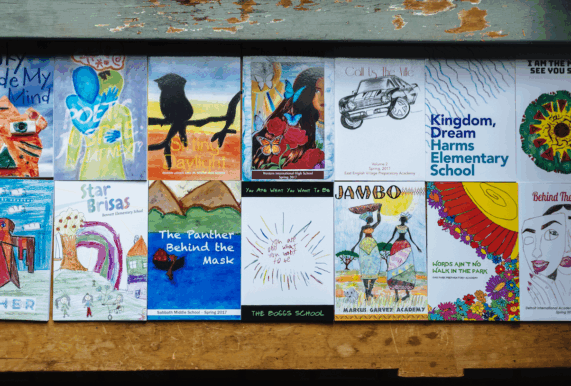
Every year at InsideOut, we publish a professionally designed literary journal at every school we serve, nearly 25 every year. As a Lead Teaching Artist, it’s my duty to shepherd student poems from their early beginnings into a final draft they are proud to give to the world. It’s a journey, no matter if you’re in the third grade or a senior in high school, and this process effectively transitions to every age.
There is something to be said about a child’s mind. Unsculpted, brilliant, overflowing with vigor and creativity, it is one of the honors many other writers and I are given to harness this unbridled exuberance for life into something special. How do you take raw energy and contain it into something palpable, relatable, digestible? For brevity and simplicity, I will narrow this process to elementary students.
More akin to an archeologist uncovering hieroglyphics from some long forgotten civilization, collecting student work requires equal parts open-mind and guesstimation. While I try to incorporate form (a structure to the poem) through model texts and classroom discussions, I don’t want to “box” students in by requiring them to write a certain way. Most kids are more concerned with spelling something correctly, and now they need to worry about writing in between the lines?
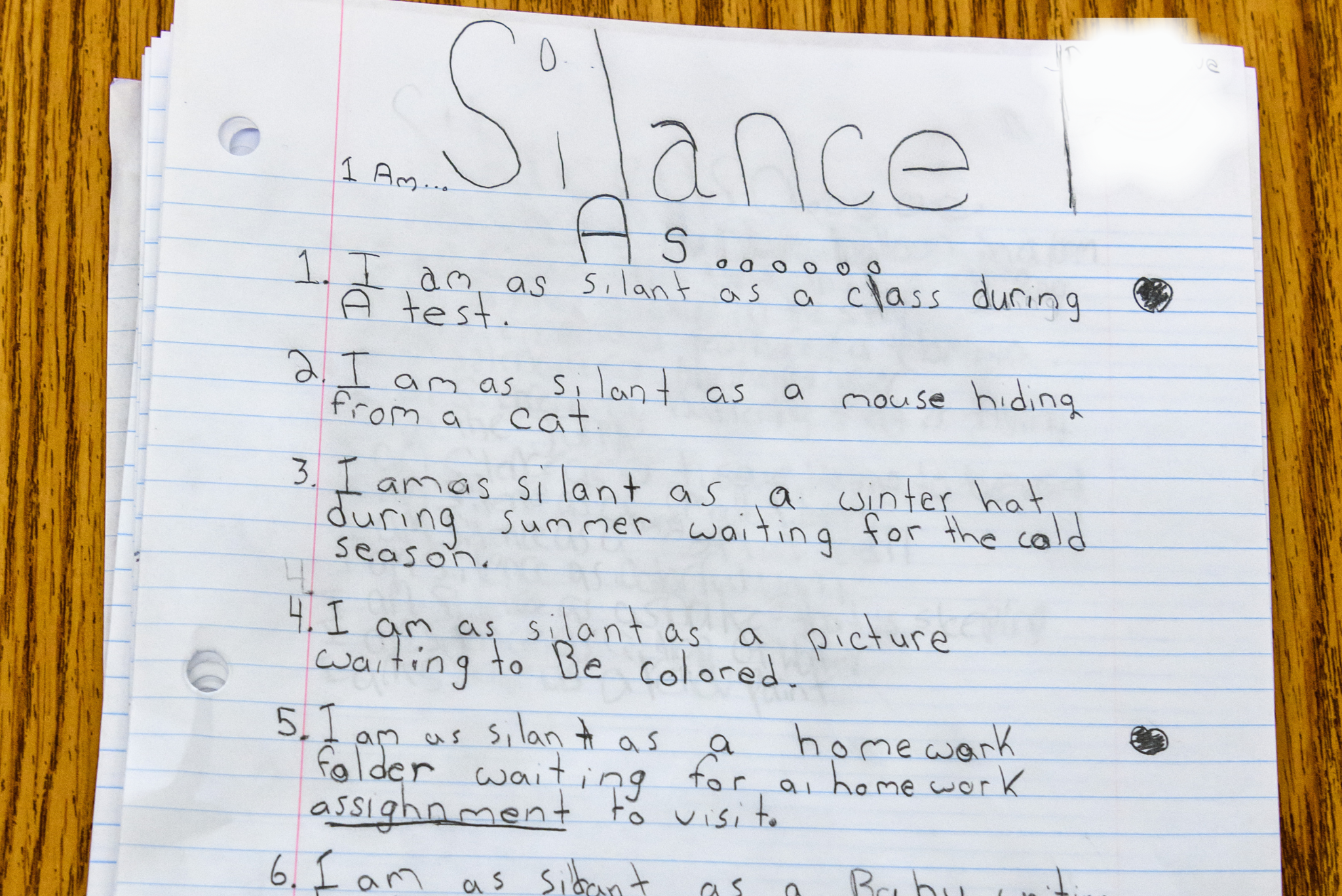
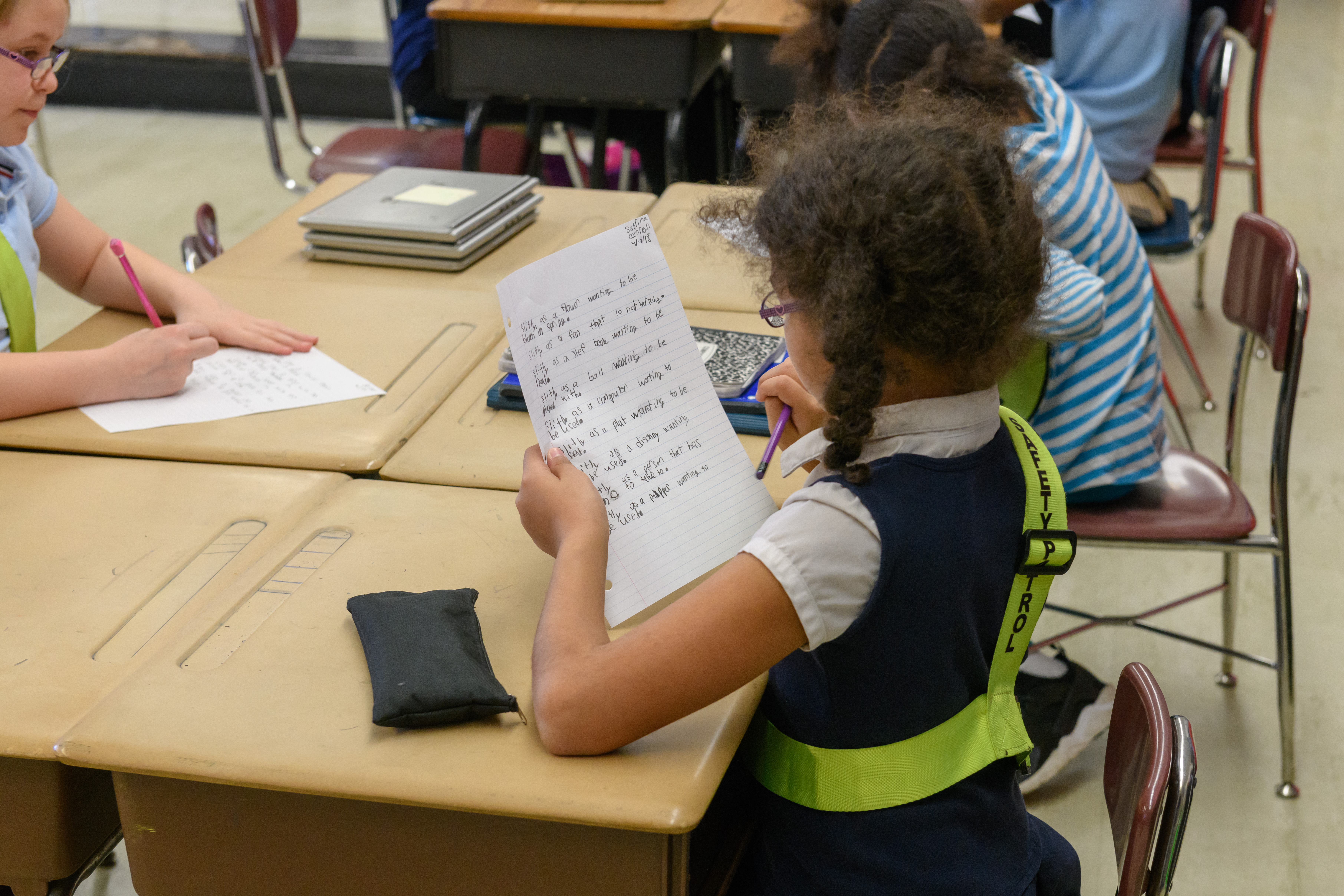
Getting words onto the page is a brave act that I want to encourage and make as easy as possible. It’s often messy. My process is three-fold:
First, spark an initial idea (or poem) with a prompt, this can be as simple as: Where do your dreams go when you’re awake? Usually I follow up with a few more related questions, and because younger students are typically confident and finish quickly, I ask them to connect what they wrote to an original drawing of theirs.
Secondly, I summon my inner amanuensis and transcribe what they’ve written into a Google doc.
Thirdly, I make the time to meet with the students individually, show them what I’ve transcribed, and have them read it aloud. This one-on-one time is special and where refinement comes into play. Here I ask them three questions:
Do you want to change anything?
Do you want to add anything?
Can we take anything away?
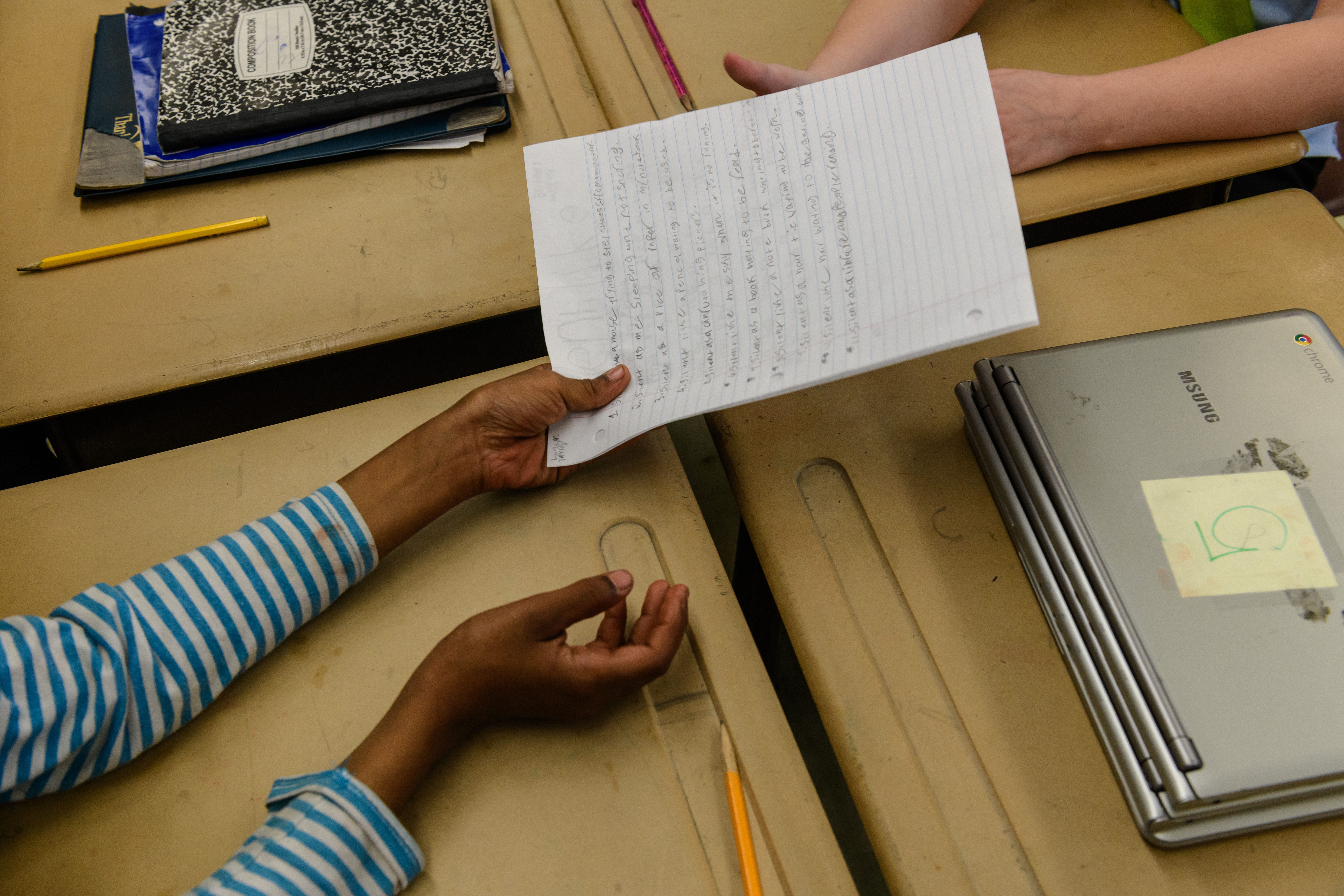
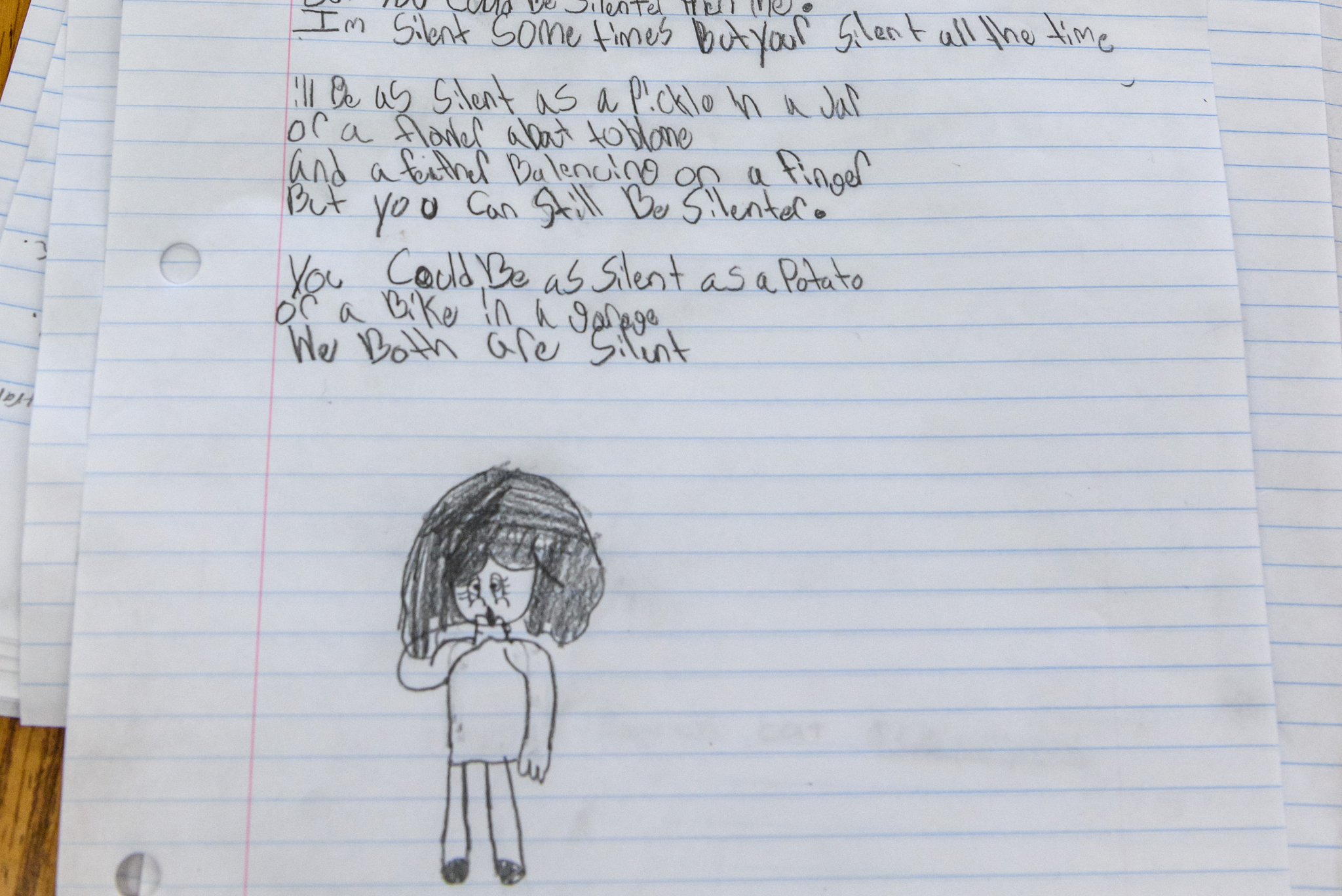
Most of the time students are satisfied with what’s on the page, enamored and surprised that what they wrote on paper has made its way to the computer. Then there are those who, after hearing their poem aloud (in their own voice), find a word can be added, or they meant to say something different, or that I got a word wrong, or the poem can continue further. This intimate setting becomes more collaborative and the students, free of distraction from other students, can narrow their focus and really dive into the poem and its possibilities.
Because editing/revising is such a complicated process (as a writer myself I’ve spent years perfecting it), with the young ones it requires a more guided hand. And talking through a poem with them produces not only clarity but the confidence that what they’ve written projects their imagination to the world.
Reynaldo George Hinojosa Jr.
Lead Teaching Artist